Spring is easy to reduce to a blossom. Look a little longer and a less familiar season appears: the dark space behind a new leaf, a branch still visible through its flowers, a patch of woodland holding several kinds of green at once. These are the small differences that bring this collection together.
A green with room inside it
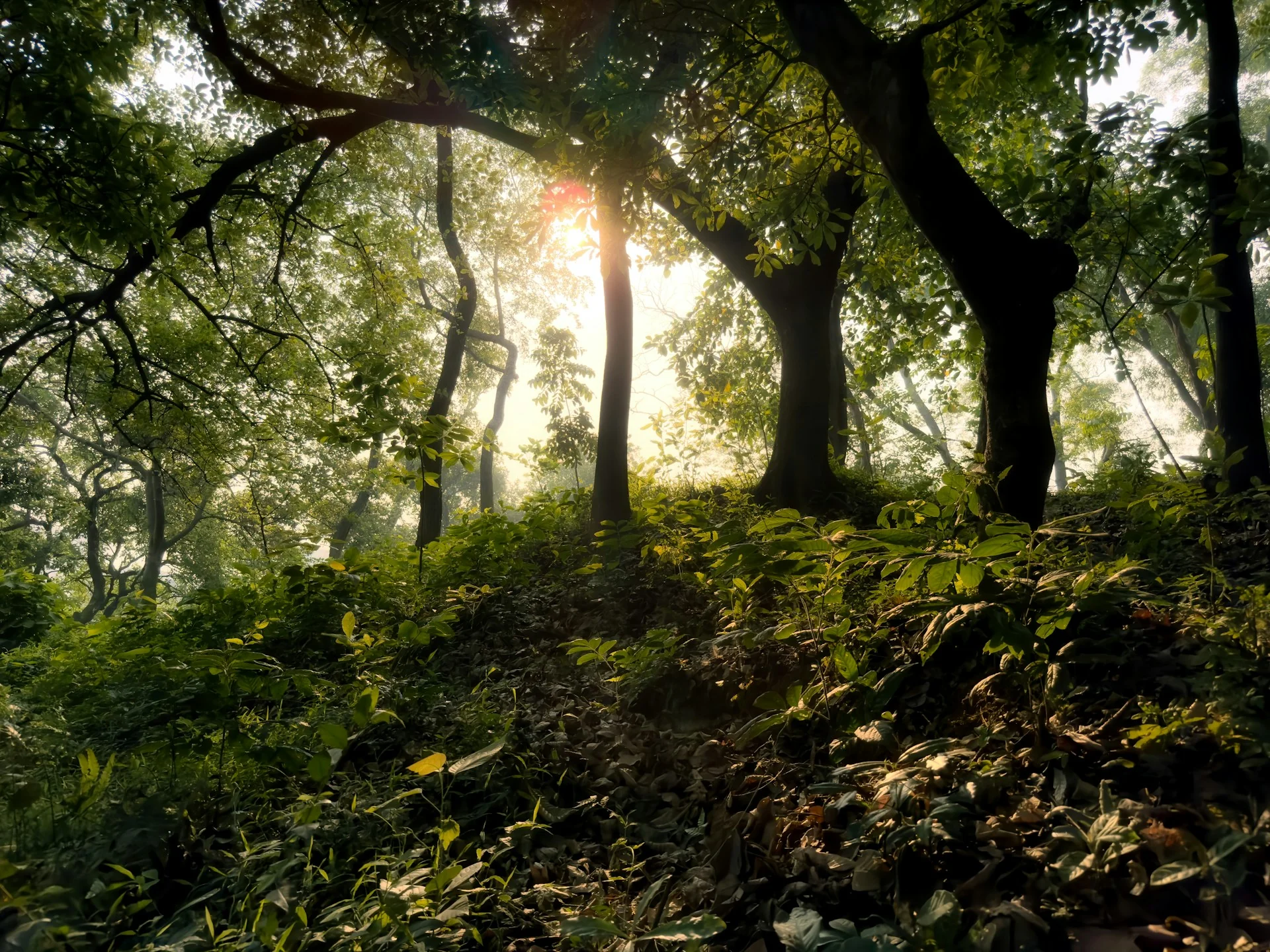
In the woodland photograph, green is a relationship between surfaces. The low leaves facing the light feel brighter than the foliage above them. Trunks interrupt the colour with almost black vertical shapes. A single shaft of sunlight makes the floor feel deep, even where individual plants are difficult to separate.
The interesting part is the transition. Watch where an illuminated edge becomes a shaded plane. The colour does not stop being green; it becomes quieter, denser and harder to name. Allowing those darker areas to remain in the frame gives the bright ones somewhere to belong. A spring picture can hold plenty of darkness without losing its sense of renewal.
Branches before the flowers
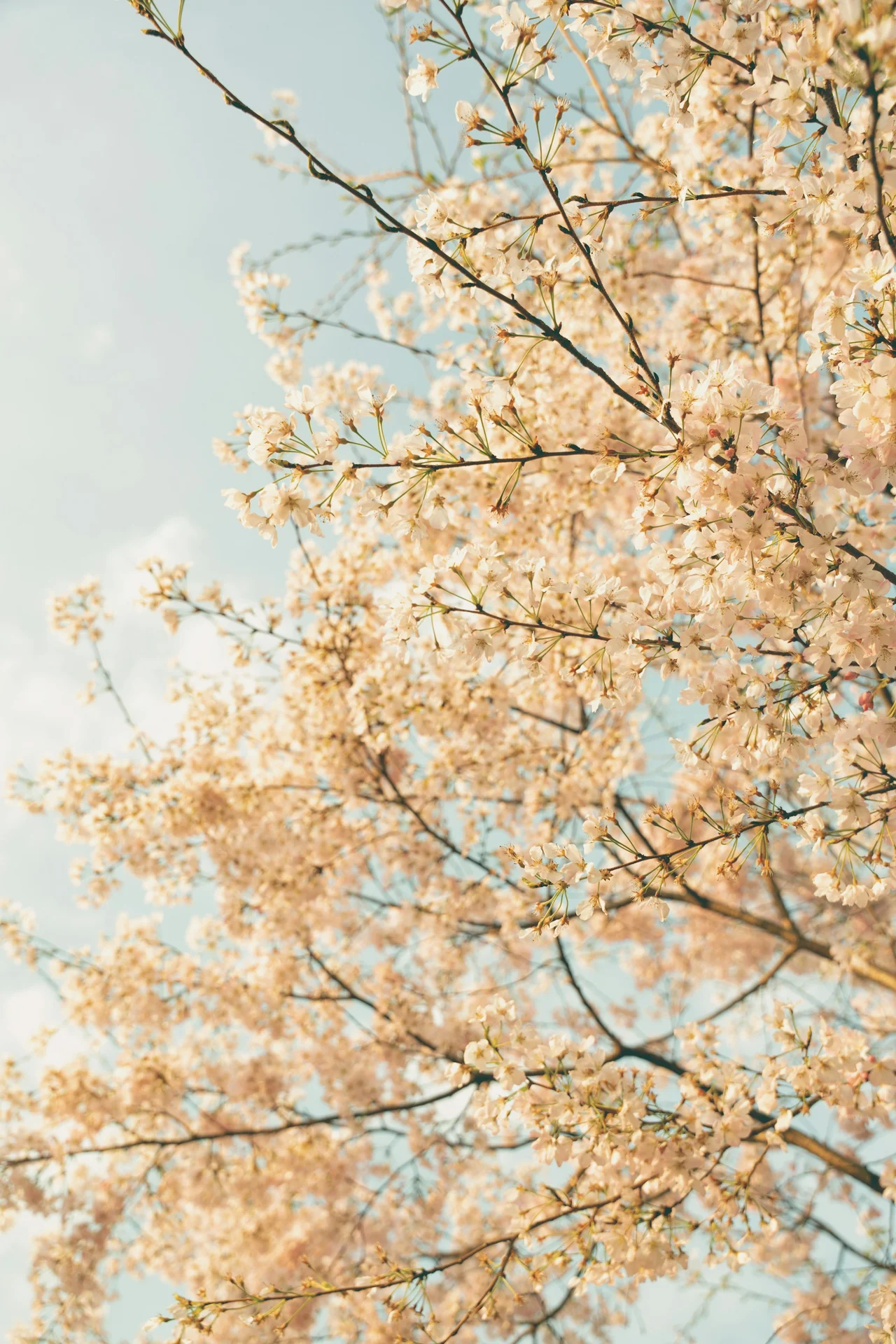
A flowering tree is also a drawing. Thin lines split, turn and disappear behind pale clusters. In the blossom photograph, the blue background lets that underlying structure stay visible. Some flowers face the camera; others become small, irregular marks. Together they make a loose pattern rather than a perfectly repeating one.
Try following one branch from the edge of the picture toward its tip. You may notice that the spaces between the flowers are as distinctive as the flowers themselves. They keep the composition open. The blossom is the first thing we recognise, but the branching line often determines how the image moves.
Near enough to lose the landscape
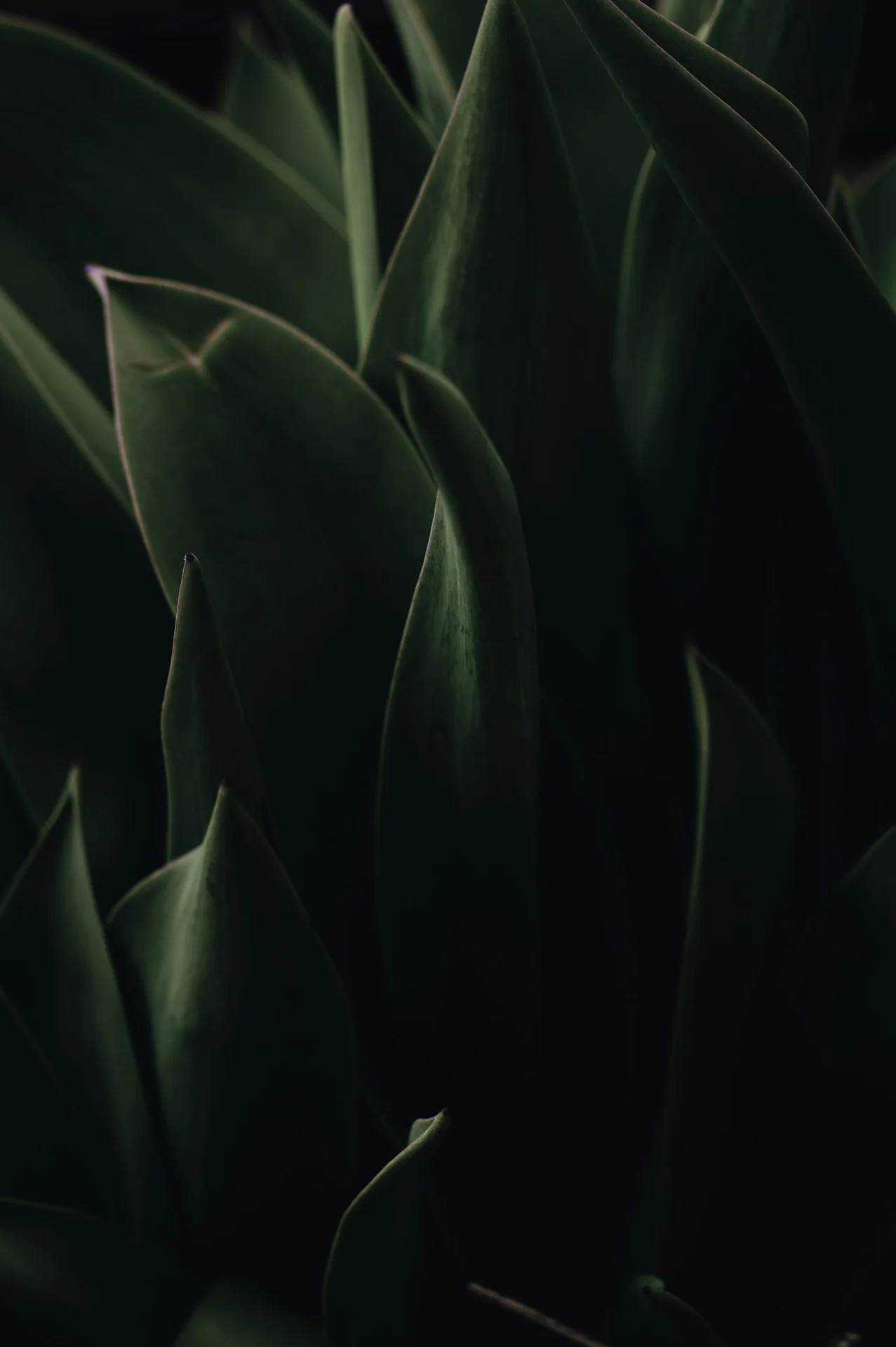
The close view of leaves offers a different scale. There is no horizon and little indication of the plant’s surroundings. A curved edge, a crease and a narrow strip of light take over the work that a whole tree might do in a wider view. The frame becomes a study of folds and intervals.
We group this image with spring for its visual relationship to growth and green. That is an editorial association, not a claim about its capture date or a universal seasonal calendar. A photograph can suggest a season without proving when it was made. Keeping that distinction clear leaves more room for observation.
The space around a new shape
There is a useful contrast between the three spring frames. The woodland is crowded with overlapping foliage. The blossom view includes many openings of sky. The close leaf image offers only narrow intervals between darker surfaces. Each picture gives the space around its subject a different amount of work to do.
Compare one of those spaces across the collection. An opening in a canopy can connect the foreground to a brighter distance. A gap between flowers can reveal a branching line. A thin dark interval beside a leaf can make its curved edge easier to follow. None of these spaces is simply unused background. They help describe the visible shape and how it sits among other things. Looking at them together gives spring a wider visual vocabulary than flowers or fresh colour alone.
Look again, without the label
After browsing these photographs, return to one with the word “spring” temporarily set aside. Describe what is actually present: pale petals, green planes, slender lines, bright openings and deep shade. This small exercise helps separate a visual observation from a familiar seasonal story.
The collection works best at both distances. Seen together, the photographs suggest an opening up. Viewed individually, each has its own pace and structure. There is no single shade or subject that has to stand for the whole season. Start with the image that makes you pause, then let a small detail guide the next look.